
Welcome to Fast Company Daily, our daily newsletter on LinkedIn, featuring a free article selected each day by our editors as well as a roundup of great advice on careers, hiring, innovation, and technology.
Visit fastcompany.com for our top stories and breaking news. First time seeing this? Please subscribe.
- Shake Shack is responding after a kiosk appeared to raise menu prices immediately after a customer declined to leave a gratuity.
- The USDA warns that recalled beef sold in Florida and Texas could cause "serious" issues if eaten. A Florida-based beef distributor bypassed a crucial inspection.
- Anthropic models will soon inject watermarks identifying AI-generated text. The imperceptible marks will be invisible and will travel with the text.
- New data shows that fear of losing a steady paycheck looms large in the minds of many in the workforce—so much so that they’re willing to make some sacrifices.
Many modern founders are focused on artificial intelligence's capabilities within digital fields. Alex Reben would rather contemplate "the world of thought to thing" and how AI can manifest in the physical world."
Imagine AI can somehow help you change what you're expressing into a visual element and allow you to change how you engage with the world using this technology," Reben muses.
At Reben's startup phyzify , combining agentic AI with authentic ideas and factory production is the key to helping people interact with the physical world in new ways.
Watch more Fast Company video content here and tune in to the latest episode of Adventures in AI.
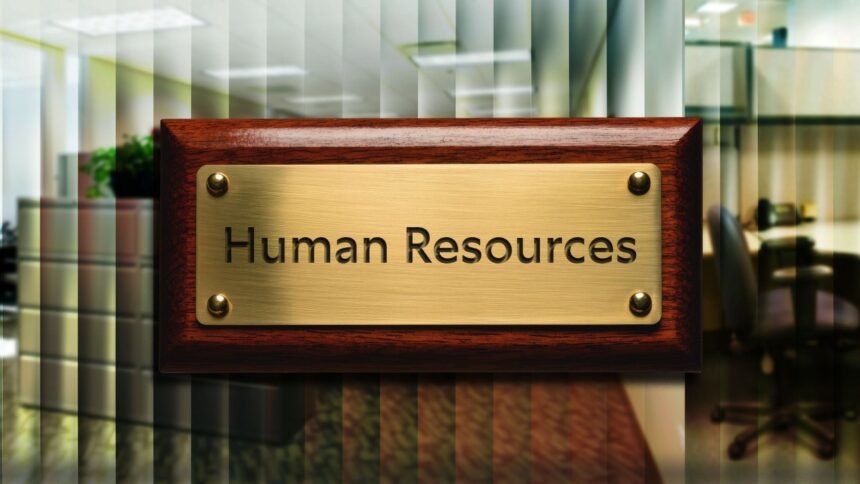
Why we still hate HR—and 100 business leaders on how to fix it
By Jay Woodruff
Earlier this month, a senior executive at a global company shared a story to give me a sense of how people feel about human resources in corporate America these days. They were planning a dinner party “and someone came running into my office and said, ‘Why are you inviting the head of HR? The whole vibe’s gonna go away.’ And I was like, what are we going to be doing so wrong that HR can’t be in the room?”
Although this anecdote could be read as being about one buzzkill, or even the entire HR discipline being a party nonstarter, it’s much bigger than that.
Employees and company leaders alike have very strong feelings about HR—and not much of it is positive. In a series of Fast Company LinkedIn polls, more than 1,500 respondents expressed negative views about HR.
- 51% say HR is not very responsive when they bring it a concern.
- 75% say HR is ineffective/nonfactor in helping them achieve professional goals.
- 56% say HR is adding very little (33%) or no significant (23%) value to the organization.
These results reinforce a March 2024 survey of nearly 1,000 workers that revealed 86% of them were afraid of their Human Resources department.
In August 2005, Fast Company published a cover story that blared “Why We Hate HR.” Since then, the human resources discipline has seemingly been wholly transformed. Increasing investment in technology (currently estimated at more than $50 billion globally) has delivered cloud-based platforms that provide workers greater flexibility, more communication tools, and access to benefits and payroll information from anywhere on their mobile devices. It has created vast libraries of custom-made learning and development curricula. Applicant tracking systems have streamlined the talent acquisition process.
The HR tech boom has spawned tens of thousands of companies, with big winners such as Workday ($36 billion market cap) and Rippling ($17 billion valuation) becoming sector giants.
The function has also achieved rarified corporate stature, as new C-level titles such as chief human resources officer (CHRO) and chief people officer (CPO) have proliferated. If a top complaint two decades ago was that HR didn’t have a seat at the strategic table, increasingly it does.
Some HR leaders have even become business celebrities! Patty McCord, chief talent officer at Netflix, created a 120-plus page “culture deck” that promoted “the keeper test” and other strategies to increase “talent density” for the overall good of the team. Sheryl Sandberg, then Facebook’s chief operating officer, described it as “the most important document ever to come out of Silicon Valley.” Google’s senior vice president of people operations, the ex-McKinsey consultant Laszlo Bock, turned his advocacy of “high-freedom” companies (those that granted autonomy to employees) into a best-selling book. And Google’s focus on people analytics further fueled the proliferation of HR tech.
These days, it’s hard to imagine a book entitled Work Rules!, Bock’s bestseller, resonating with so many readers. Whatever progress HR made in the twenty-first century—via technology, greater responsibility, and worker-friendly policies such as expanded benefits and remote-work policies (facilitated by new tech tools and accelerated by the COVID-19 pandemic)—has waned. It likely hasn’t helped, either, that HR is having to unwind flexible work policies for return-to-office mandates and serving as a key collaborator in rolling out AI tools that have workers fearing for their jobs.
The problem of why so many people still hate HR runs deep. Can HR be saved? In a word, yes, and the answer doesn’t lie in its wholesale elimination (sorry, Bolt CEO Ryan Breslow) or trying to turn it into something it’s not (like Amazon’s people, experience, and technology team).
We reached out to 100 business leaders—HR practitioners, recruiters, founders, and 66 CEOs—to develop some answers. They’re not only for HR pros but for all leaders thinking about how to create the companies they want.
Read the full story on Fast Company.
Follow us on LinkedIn, X, Instagram, Threads, Facebook, WhatsApp, TikTok and Bluesky.
Fast Company Daily
290,374 followers
To view or add a comment, sign in
More articles by Fast Company
Show more See all articles