
Summary
-
We have paused our live coverage, but further details of the earthquake in Colombia can be found here
-
At least 111 people have been killed and dozens more are injured after a powerful earthquake hits western Colombia, according to local officials
-
The magnitude-7.4 quake struck on Monday at 07:34 (12:34 GMT) in the Chocó region at a depth of 107km (66 miles), the US Geological Survey says
-
Shaking was felt across the country, as well as in neighbouring Venezuela, Ecuador and Panama
-
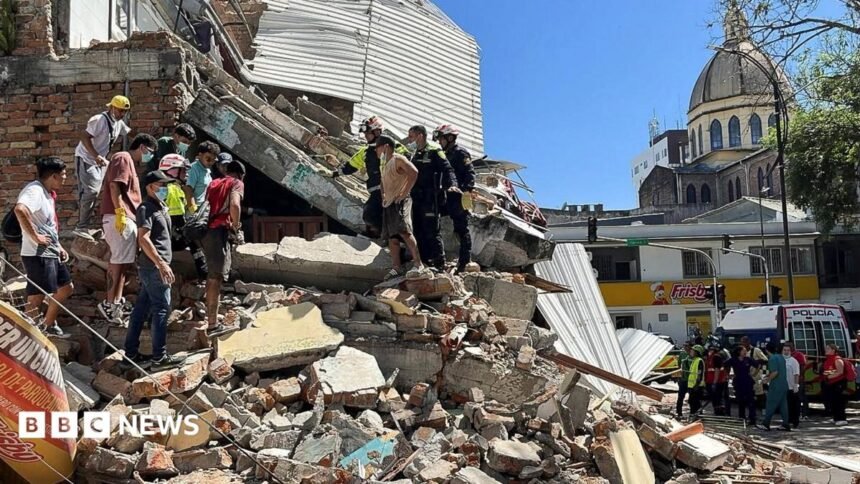
Buildings have collapsed and rescue efforts are under way to free those who have been trapped beneath rubble
-
It comes less than two months after twin quakes devastated parts of Venezuela, killing more than 6,100 people
-
Follow BBC Mundo's live coverage in Spanish here
PreviousNext
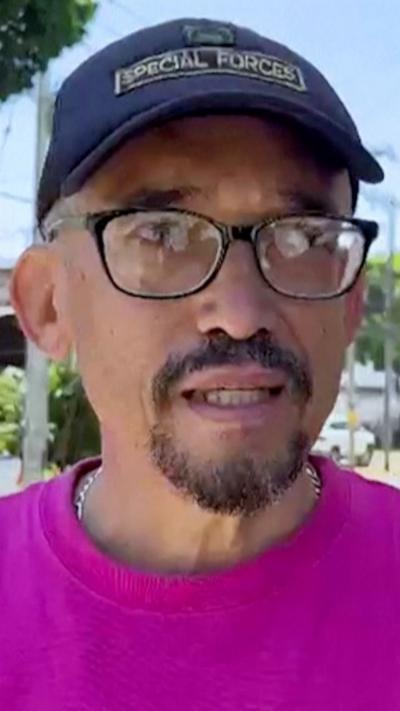
- 0:23Cali is 'practically collapsed', says resident. 00:00:23, play videoCali is 'practically collapsed', says resident
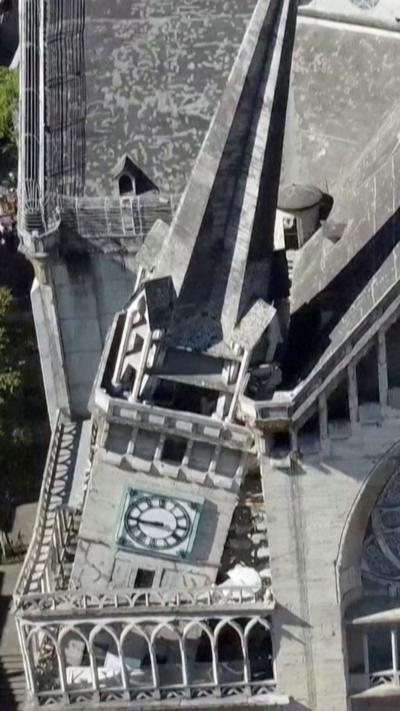
- 0:26Aerial footages shows damage in Manizales. 00:00:26, play videoAerial footages shows damage in Manizales
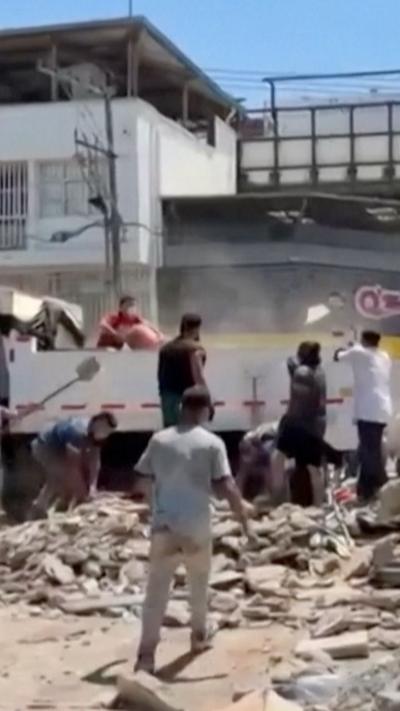
- 0:38Rescue efforts underway in Cali. 00:00:38, play videoRescue efforts underway in Cali
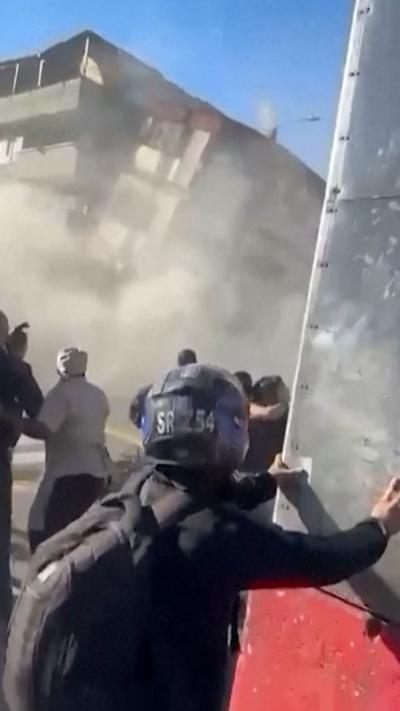
- 0:22Building collapses in Pereira. 00:00:22, play videoBuilding collapses in Pereira
- 0:14Ground shakes as earthquake hits hospital. 00:00:14, play videoGround shakes as earthquake hits hospital
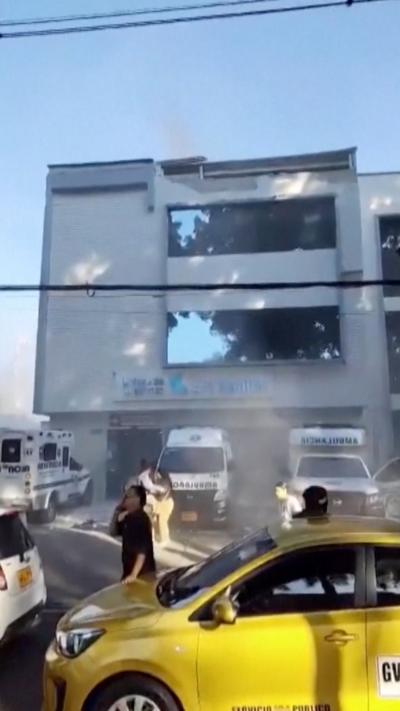
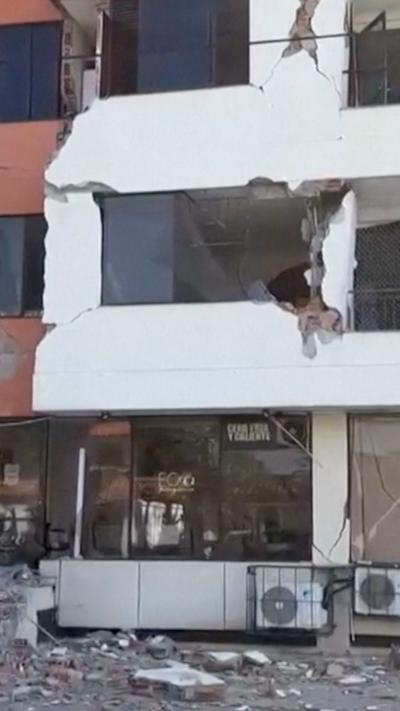
- 0:21Buildings destroyed after quake. 00:00:21, play videoBuildings destroyed after quake
Live Reporting
Edited by Oliver O'Connell and Alex Smith
-
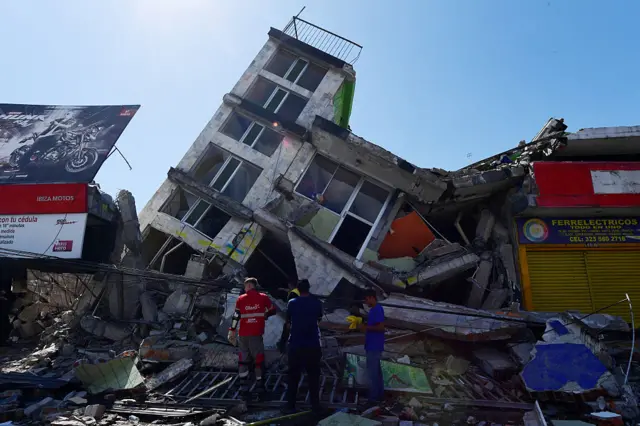 Image source, Getty Images
More than 100 people are dead and there is widespread destruction after a major earthquake hit parts of western Colombia.
Here are they key facts:
- At least 111 are confirmed dead, with a further 87 injured, according to Colombian President Abelardo De La Espriella
- The 7.4-magnitude earthquake originated more than 100km below the surface of San José del Palmar, in Colombia's Chocó region
- Search and rescue efforts are under way across the affected region, which has seen dozens of collapsed buildings – with the Colombian government declaring the incident a national emergency
- I wide array of international support has been offered, including from France, Mexico, the United States and European Union
One woman, who was in the city of Manizales when the quake hit, has described how "everyone was screaming" and that "bricks were falling off the walls" of the surrounding buildings.
While a British tourist in the heavily-impacted city of Cali has described he has "never experienced anything like" the quake, which caused 32 buildings in the city to collapse.
We are now ending our live coverage but you can read more about today's events here: At least 111 killed in Colombia's largest earthquake in years
Shareclose panelCopy linkAbout sharing
-
 Image source, EPA
Image caption, Abelardo de la Espriella was sworn in as Colombia's president just days ago on 7 August
Colombia's President Abelardo de la Espriella has called for "the nation’s unwavering unity" following a deadly earthquake that has caused widespread damage.
In a post on X, he writes that the state "will not yield or falter" in the face of the "adversity currently afflicting our people".
He says the government is taking on the care of victims and reconstructing affected areas with "resolve, full dedication, and absolute commitment".
"I will be at the forefront of this national emergency, traveling tirelessly throughout the country to make the immediate decisions that protect the lives of every citizen," de la Espriella adds.
"My call today is for the nation’s unwavering unity. Let us surround the victims and the families who are suffering this ordeal today with the greatness and solidarity that define our patriotic character."
Shareclose panelCopy linkAbout sharing
-
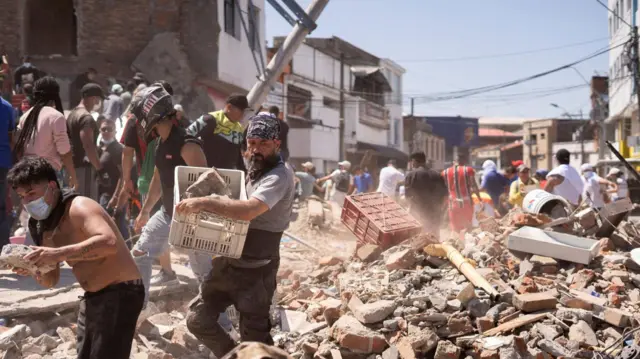 Image source, Reuters
Buildings have been reduced to rubble, search and rescue operations continue and more than 100 are dead following an earthquake that his parts of Colombia on Monday.
Here's what we've heard from those that experienced it first hand:
- BBC journalist José Carlos Cueto, who was in Bogotá at the time of the quake, has described how the taxi he was travelling in began to shake, before buildings, trees and traffic lights started to tremble
- Angélica Ávila, who was in the city of Manizales, says "everyone was screaming" when the shakes started, with cracks appearing on the walls of the hotel she was staying in and bricks "falling off the walls"
- Journalist and meteorologist Luis Felipe Molina that everything in his Manizales flat was moving, adding that he had "never seen anything like it… it was a terrible and terrifying experience"
- Dan Cutler, a 29-year-old British tourist, who in Cali, says cracks appeared in the walls of his hotel, with plaster peeling off the walls, while nearby "weaker structures" were destroyed
Shareclose panelCopy linkAbout sharing
-
 Nathalie Jimenez
Isabel Gomez runs a small gift shop in Cali, next to a five-story building that collapsed entirely when the earthquake struck. All of the families who lived there are now homeless.
"We don't have food, water, power," she says.
Gomez, a native of the city, has spent the day broadcasting live from the site, amassing thousands of views, as rescue teams work through the rubble.
In her videos, she holds up a handwritten sign with the location of the collapse, appealing for help. "They're calling for more people to help in the rubble, but no one is answering," she says, her voice breaking, in one of her livestreams.
Five people – all from one family – have been pulled out alive so far.
With phone signal patchy and no power in the area, Gomez has become an informal point of contact for hundreds of anxious relatives trying to find out whether their loved ones have been found.
Using pen and paper, she is keeping a handwritten list of everyone rescued nearby, in case she runs out of battery on her phone, she says.
Rescuers believe a young girl may still be trapped inside, and are listening for any sign of life beneath the debris.
"It's a tragedy bigger than anything we've seen," she says. "We really need help."
Shareclose panelCopy linkAbout sharing
-
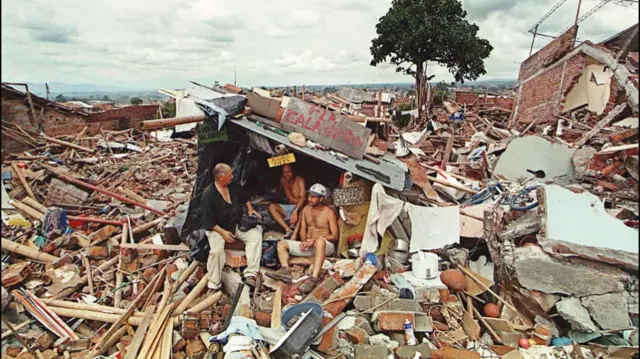 Image source, Getty Images
Image caption, Victims of Colombia's most deadly earthquake find shelter in a makeshift hut in 1999
Colombia's location at the intersection of several tectonic plates makes it an area prone to strong seismic activity and, therefore, to high-intensity earthquakes.
Earthquakes are generally stronger along subduction zones, located near the coast.
Since 1950, more than 3,500 people have died as a direct result of earthquakes in Colombia. The deadliest occurred in 1999, when a magnitude 6.2 earthquake struck the Coffee Region, leaving 1,185 dead.
More recently, last year, a magnitude 6.3 earthquake struck Cundinamarca. There were no fatalities.
Shareclose panelCopy linkAbout sharing
-
Daisy Noble is from London and is currently travelling in Colombia with her husband and returned to Medellin from the Chocó region, where the earthquake hit, on Sunday.
She says her husband woke her up when the earthquake struck, telling the BBC: "I realised the whole building was rocking backwards and forwards as if we were on a boat – a very confusing and alarming feeling."
Daisy used her phone to research what they should do and they stayed in their hotel room, not knowing if it would pass or become worse.
"Thankfully, our modern hotel building was unharmed, but many people working in our hotel told us that their buildings had been evacuated and that there was damage in the comunas in the city, where the buildings are not of robust construction," she says.
"It was the most surreal experience. My heart goes out to those in the most seriously affected areas."
Shareclose panelCopy linkAbout sharing
-
Images from Colombia show buildings reduced to rubble by the 7.4-magnitude earthquake that struck earlier on Monday.
The official death toll so far sits at least 111 people, with a further 87 injured – while search and rescue operations continue.
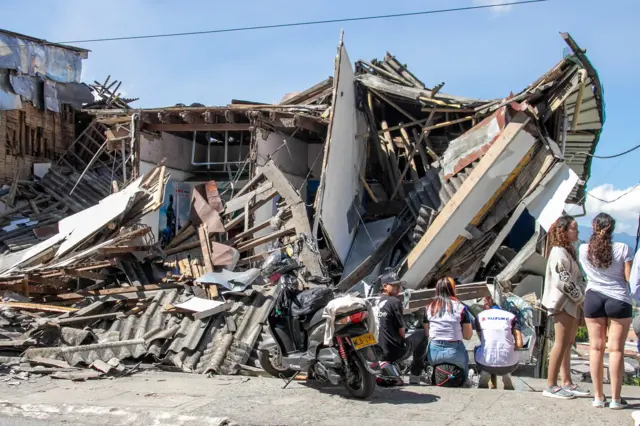 Image source, EPA
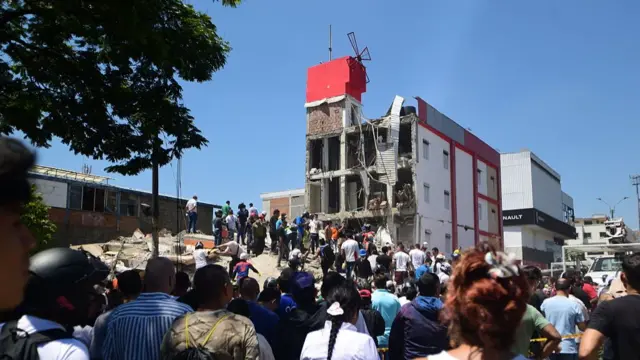 Image source, Getty Images
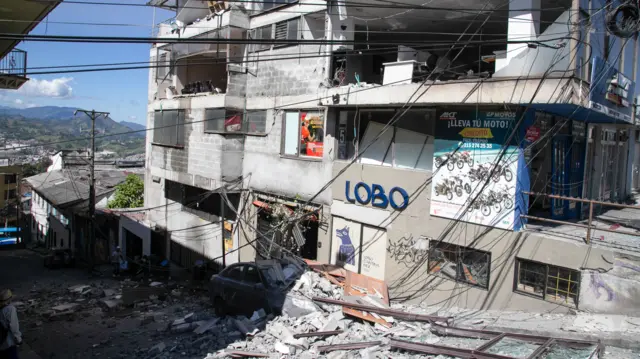 Image source, EPA
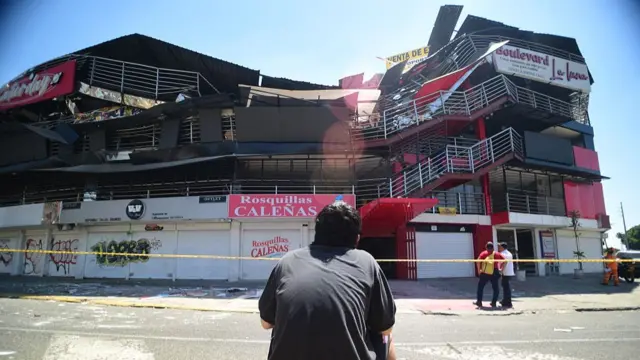 Image source, Getty Images
Shareclose panelCopy linkAbout sharing
-
Alejandro Eder, the mayor of Cali, around 200km from the Colombian earthquake's epicentre, as told the BBC that the city has had "32 confirmed building collapses".
Emergency crews have been able to rescue 38 people so far, but some had died, Eder tells BBC World Service's Newshour.
He said he could not confirm the number of casualties because the "search and rescue phase" had turned into "a needle in a haystack exercise" as the city had "held up quite well".
He added that the city's search and rescue teams were "very well trained" and had recently been part of the Venezuela quake relief effort.
Shareclose panelCopy linkAbout sharing
-
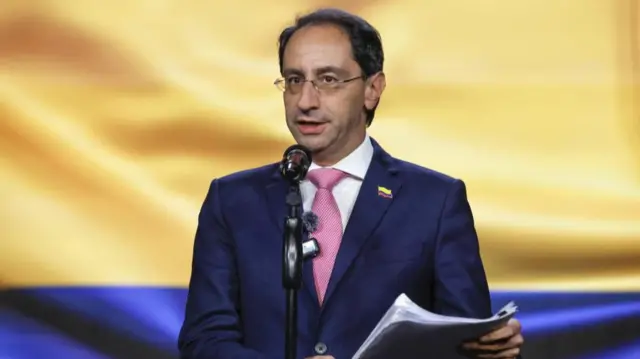 Image source, EPA/Shutterstock
Image caption, José Manuel Restrepo Abondano pictured in July, when he was VP-elect
Colombia's vice-president says his country's government is "working tirelessly" to "stand by every community struck by this tragedy".
In a post on X, José Manuel Restrepo Abondano acknowledges "the support of our international allies who have responded with solidarity and commitment".
"We will not rest until that aid reaches every family that needs it and contributes to the recovery of the affected territories," he says.
"Today the world extends a hand to #Colombia."
Shareclose panelCopy linkAbout sharing
-
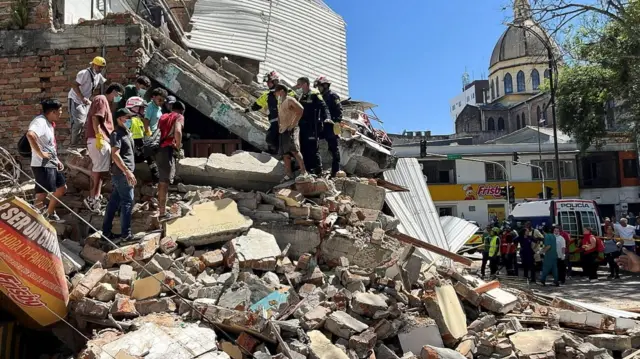 Image source, Reuters
The earthquake that led to widespread disruption and more than 100 deaths in Colombia caused 1.5 million people to experience "very strong" shakes severe enough to "damage to unreinforced masonry buildings", according to the US Geological Survey (USGC).
It says the 7.4-magnitude earthquake originated at an "intermediate depth" of around 100km (62 miles) within the "slab of old seafloor sinking beneath the South American continent".
These intermediate depth, "interslab" quakes are generally less dangerous than quakes of the same magnitude that occur closer to the surface, it says.
However, the USGS adds that due to the nature of the fault, the energy that will have been released is at "frequencies that are damaging to buildings".
Shareclose panelCopy linkAbout sharing
-
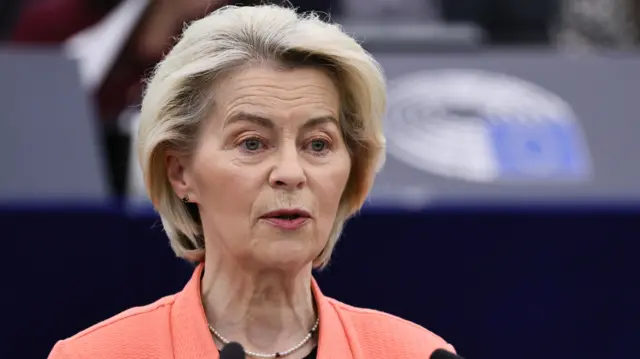 Image source, EPA/Shutterstock
EU chief Ursula von der Leyen says the bloc is using its Copernicus satellite system to help with Colombia's rescue operations but is "ready to provide more support".
"Europe’s heart is with the people of Colombia after the terrible earthquake in the Chocó region," she adds.
Shareclose panelCopy linkAbout sharing
-
Dan Cutler, 29, is from London but has been in Colombia for around two months as part of a big trip with his partner.
He is currently in Cali, south of where the earthquake struck, and tells the BBC he was woken by the earthquake, saying: "I've never experienced anything like it."
"We sprinted outside in our pyjamas. There's no major structural damage to the hotel, but there are surface cracks in the walls, and paint and plaster have peeled off," he says.
"Other areas of the city have been shut down, the power is out, and there are signs of weaker structures having been destroyed."
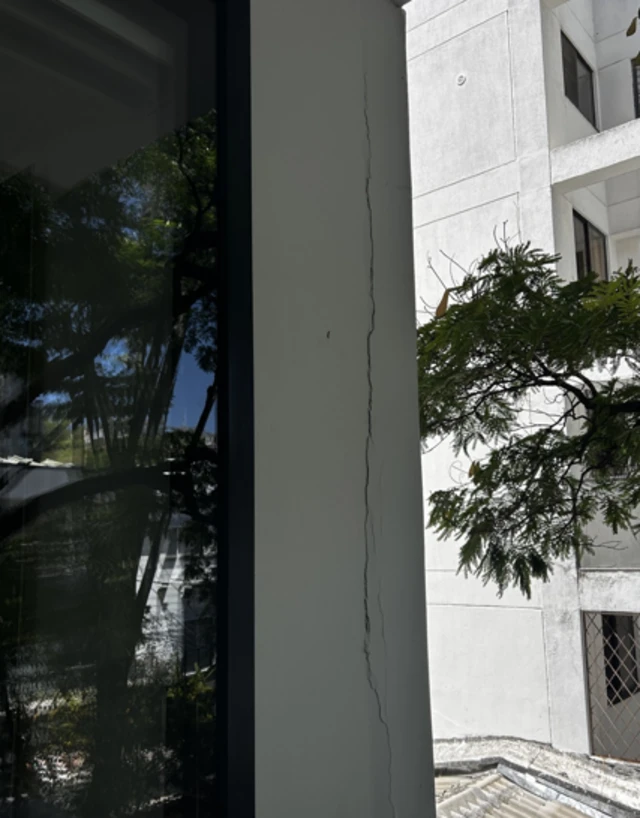 Image source, Courtesy of Dan Cutler
Shareclose panelCopy linkAbout sharing
-
By Richard Irvine-Brown and Kumar Malhotra
Between Cali and Manizales, and 55km (35 miles) from the estimated epicentre of the quake is the city of Pereira, in the heart of Colombia's coffee growing region.
Videos we've verified show the extent of damage across the city.
At Bolivar Square, the main plaza at the heart of Pereira, footage shows at least one building collapsing, sending debris and dust across the open space where many people had gathered.
To the east, another building, a four-storey apartment building teeters then collapses at the junction of Calle 8 and 13.
Other footage shows at least one building collapsed in the more recently developed neighbourhood near Avenida Belalcazar.
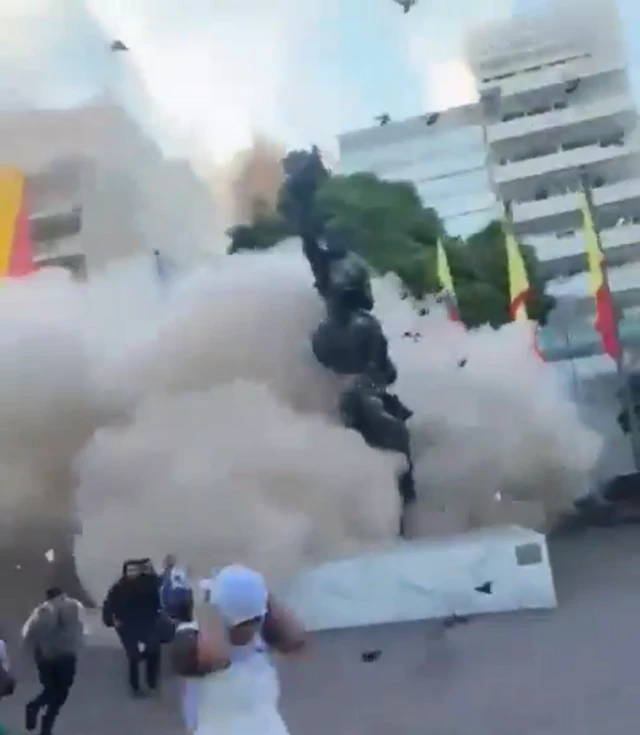 Image source, X
Image caption, At least one building collapsed by Bolivar Sq, the city's main plaza
Shareclose panelCopy linkAbout sharing
- Shareclose panelCopy linkAbout sharing
-
 BBC Mundo
Journalist and meteorologist Luis Felipe Molina grew up and has lived most of his life in the city of Manizales in Colombia’s coffee region – roughly 150km (93 miles) from where the earthquake struck.
He was six when a deadly earthquake hit Colombia on 25 January, 1999 and became interested in understanding the science behind them as a result.
He tells BBC Mundo that major earthquakes have happened in the area with a certain regularity. Before 1999, there were ones in 1962 and 1979.
As a result, Manizales has “very strict seismic-resistant building regulations”.
Evidence of this is the fact that the 17-storey building where he lives remained standing despite the tremendous force that shook it on Monday morning.
“Everything in my flat was moving. Through the window, the surrounding buildings were shaking from side to side. I have 450 books and only a few were left standing on the shelves. You could hear glass breaking and people screaming,” Molina said.
“I had never seen anything like it. The seismic waves were not constant but came in powerful surges that struck with enormous force.”
The Metropolitan Basilica Cathedral of Our Lady of the Rosary in Manizales also remained standing, according to images circulating on social media – although one of its towers was visibly damaged.
“The cathedral is very old. It was built by Europeans and was not designed to modern seismic-resistance standards, but it remained standing,” said Molina.
“It was a terrible and terrifying experience.”
Shareclose panelCopy linkAbout sharing
-
The death toll in Colombia's earthquake has now reached 111, according to President Abelardo De La Espriella.
At least a further 87 people have been injured, he adds.
Shareclose panelCopy linkAbout sharing
-
The Colombian government has declared a national emergency following an earthquake that has caused widespread damage and seen dozens killed.
The 7-4.magnitude hit the western region of the country at 07:34 (12:34 GMT) on Monday, with its epicentre in the country's Chocó region.
Shareclose panelCopy linkAbout sharing
-
 Image source, Getty Images
Pop star Shakira says her heart is with "everyone who felt this earthquake today".
The Colombian singer also pays tribute to "families going through moments of anguish" as she offers "strength and love for my homeland".
"In times like these, we Colombians know how to come together and support one another," she writes on X.
"Let's embrace tightly and stay tuned to the instructions so we can help as soon as possible."
Shareclose panelCopy linkAbout sharing
- Shareclose panelCopy linkAbout sharing
-
The leaders of some of Colombia's near neighbours have pledged their support following the massive 7.4 earthquake that struck on Monday morning.
Nayib Bukele, El Salvador's president, says he's in communication with officials in Colombia and is "ready to provide immediate support with our rescue teams, medical personnel, paramedics, supplies, or any other assistance that our Colombian brothers and sisters deem necessary".
Ecuador's President Daniel Noboa Azin also pledges support, offering 47 rescuers, specialized dogs, and equipment with autonomy to operate for 7 days.
"We are ready to mobilize whenever you require," he writes on social media.
Mexico's Claudia Shienbaum echoes that sentiment.
"Of course, all the support that the people of Colombia may require; we'll be there."
Shareclose panelCopy linkAbout sharing